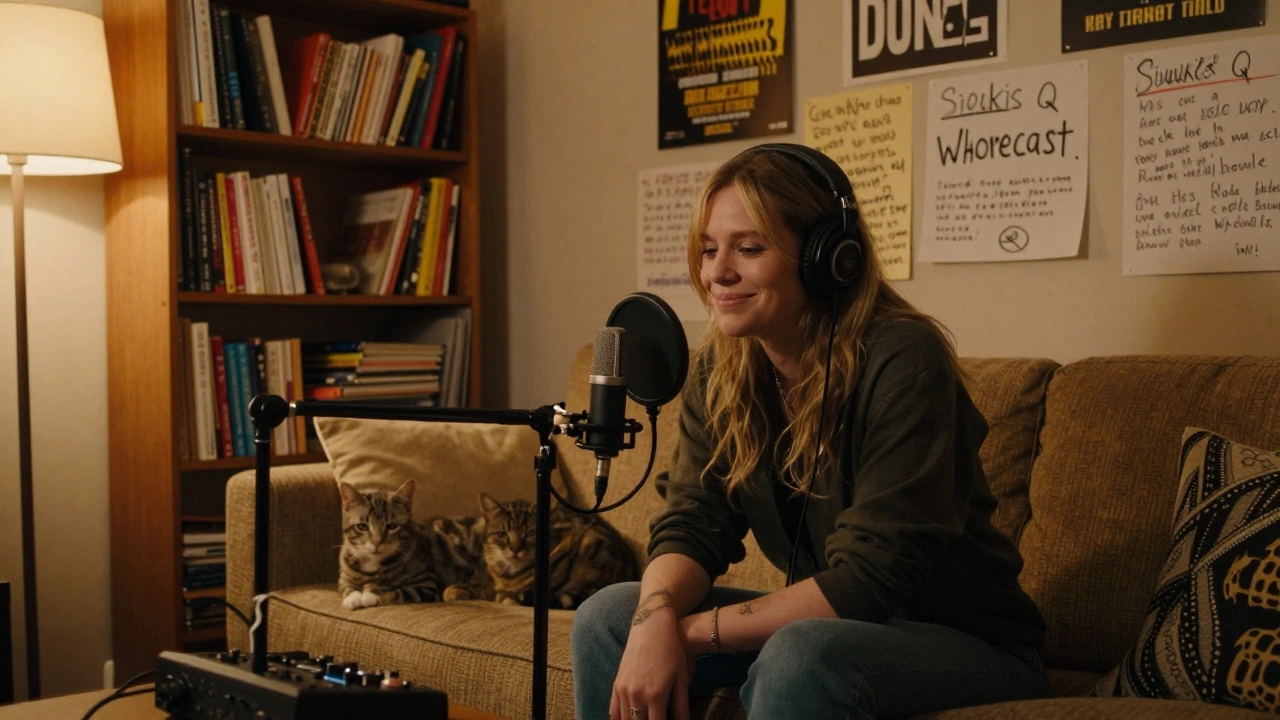
Siouxsie Q doesn’t talk about sex the way most people do. She doesn’t whisper it, she doesn’t sanitize it, and she sure as hell doesn’t pretend it’s something to be ashamed of. As the creator of Whorecast, a podcast that’s been running since 2018, she’s turned conversations about sex work, desire, and power into something raw, real, and strangely comforting. Listeners don’t tune in for gossip or shock value-they come for the honesty. And in a world where sex workers are either idealized or demonized, Siouxsie’s voice cuts through the noise.
There’s a reason people still talk about that episode where she interviewed a former escort from London who now runs a small agency out of her flat. She didn’t glamorize it. She didn’t vilify it. She just let the woman speak. That episode went viral-not because it was provocative, but because it felt true. If you’re curious about what life looks like behind the scenes for someone working in the industry, you can read more about the realities of escort london vip experiences in cities where demand is high and stigma is louder.
How It Started
Siouxsie didn’t set out to start a podcast. She was working as a freelance writer in San Francisco, covering nightlife and underground culture. One night, after a show at a burlesque club, she ended up talking to a stripper named Marisol about how no one ever asked her what she actually thought about her job. Most interviews focused on danger, exploitation, or redemption arcs. No one asked: What do you like about it? What’s boring? Do you miss the quiet?
That conversation stuck with her. A few months later, she recorded her first episode in her living room, using a $50 USB mic and a free Audacity download. The title? Whorecast. She didn’t change it. She didn’t apologize for it. The first episode had 400 downloads. By the end of the year, it had 40,000.
Why the Name Matters
Reclaiming language is a political act. Siouxsie doesn’t use terms like "adult entertainer" or "independent contractor" unless someone else insists on them. She says "whore." Not because she wants to be offensive, but because it’s accurate-and because the word has been weaponized for so long that owning it becomes a form of resistance.
"The media paints us as victims or villains," she says. "But most of us are just people trying to pay rent, take care of our kids, or save up for a dental implant. We don’t need saving. We need respect. And respect starts with listening without judgment."
What Gets Left Out of the Mainstream Story
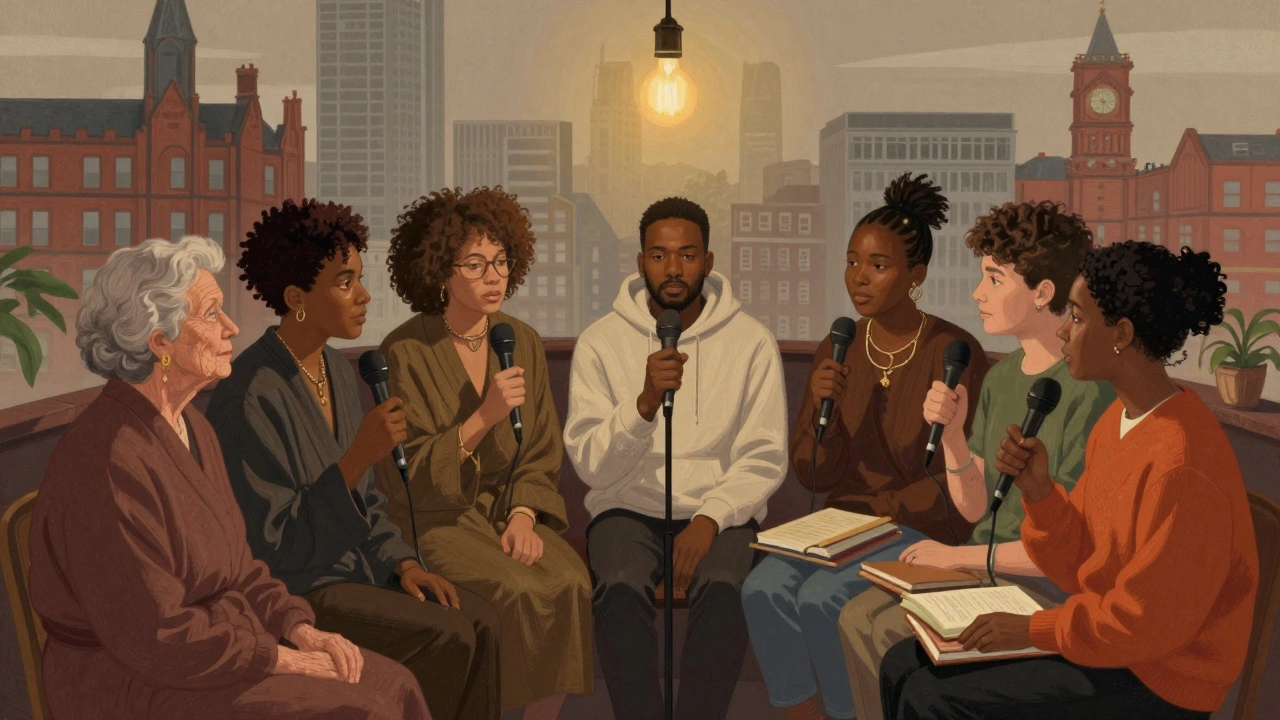
Most documentaries about sex work focus on trafficking or addiction. Those are real issues-but they’re not the whole picture. Siouxsie’s guests include college students moonlighting to pay off loans, retirees supplementing pensions, queer folks building community through their work, and even a few people who just really like the freedom.
One guest, a former nurse from Manchester, talked about how her shift work gave her control over her schedule in a way her hospital job never did. "I worked 12-hour shifts with no breaks," she said. "Now I pick my hours, I pick my clients, and I don’t have to smile at a doctor who thinks I’m lazy because I have chronic pain."
Another episode featured a trans man who does webcam work under a pseudonym. He talked about how his clients often assume he’s a woman-and how that assumption lets him feel safe in a space where he’s usually hyper-visible. "I’m not here to trick anyone," he said. "I’m here because the internet lets me be whoever I need to be for a few minutes."
The Business Side
Siouxsie doesn’t shy away from money talk. She’s spoken with bookkeepers who help sex workers file taxes, lawyers who specialize in decriminalization, and even a woman who built a $200,000-a-year business selling custom lingerie to clients. She’s also interviewed people who got scammed by fake agencies or lost everything to a platform ban.
"There’s no union, no health insurance, no paid sick days," she explains. "But there’s also no boss telling you to smile more or wear heels you can’t walk in. That trade-off? It’s real. And it’s not something you understand unless you’ve lived it."
She’s started a small resource hub on her website with templates for client contracts, safety checklists, and links to mutual aid funds. It’s not perfect, but it’s something.
Media Bias and the "Rescue" Narrative
Siouxsie gets a lot of outreach from journalists who want to "tell the untold story." Often, they want her to frame sex work as something that needs fixing. "They’ll say, ‘We want to show how these women are trapped.’ I say, ‘No. I want to show how these people are surviving.’"
She recalls one TV producer who asked if she’d be willing to appear on camera wearing a hoodie and sunglasses, "to protect her identity." Siouxsie laughed. "I’ve been on national news before. I’ve been photographed at protests. I’ve given interviews with my face out. I’m not hiding. And if you want to tell my story, you tell it as I am."
That producer never aired the segment.
Why the Podcast Survives
Podcasts come and go. But Whorecast has been going for seven years. Why? Because it’s not about sensationalism. It’s about presence. People call in to say thank you for making them feel less alone. A listener from Australia wrote in last month: "I’ve been working as an escort girl uk for two years. No one in my family knows. I’ve listened to every episode since episode 12. I didn’t realize how much I needed to hear someone say, ‘It’s okay to be proud of this.’"
Siouxsie doesn’t take credit for that. She just shows up. She books the guests. She edits the audio. She answers the emails. And she keeps asking the questions no one else will.
What’s Next
She’s working on a book-tentatively titled Not a Victim, Not a Villain. It’s a collection of edited interviews, personal essays, and data from her own research on how laws affect sex workers in different countries. She’s also launching a monthly live show in Portland, where guests can call in anonymously and share stories without fear of being recorded.
And yes, she still gets hate mail. Still gets flagged on social media. Still has strangers yell at her in grocery stores. "But I’ve also gotten letters from teenagers who say they’re not going to kill themselves because they found this podcast," she says. "That’s why I keep doing it."
There’s no grand finale planned. No exit strategy. Just another episode, every Tuesday, recorded in her home studio with the door closed and the cat curled up on the couch.
"I’m not here to change the world," she says. "I’m here to make sure the people who are already living this life know they’re not crazy. They’re not broken. They’re just people. And that’s enough."
And maybe, just maybe, that’s the most radical thing of all.
There’s a quiet power in hearing someone say: "I’m not sorry for what I do." And in a world that rarely lets sex workers speak for themselves, that silence is louder than any protest.
One of her most popular episodes features a woman from Bristol who used to work as a vip london escort before transitioning into running a peer support group. She didn’t leave the industry because she was rescued. She left because she wanted to help others avoid the traps she fell into. "I didn’t need saving," she says on the podcast. "I needed a community."
Siouxsie didn’t write that line. She just pressed record.